Thinking of driving to the continent? There’s something special about taking your supercar across the Channel and heading for the mountains, lakes and sweeping roads of mainland.
But if you’re planning on driving to the continent this year, there are a few things worth knowing, especially when it comes to emissions rules, parking challenges, and how not to fall foul of speeding laws.
Emissions zones: check before you roll
More and more European cities are clamping down on vehicle emissions, and that includes some supercars, especially older ones.
France, for example, uses the Crit’Air sticker system to classify vehicles by emissions, ranging from 1 (the cleanest) to 5 or higher for older, higher-polluting cars. You’ll need one to enter many cities, including Paris, Lyon and Marseille, where access is restricted during high pollution periods or for certain vehicle types.
Even if your supercar qualifies, you’ll still need to apply for a vignette in advance and display it clearly. Some older naturally aspirated models may fall into Crit’Air 4 or 5, meaning they could be excluded during restricted hours or from specific urban areas altogether.
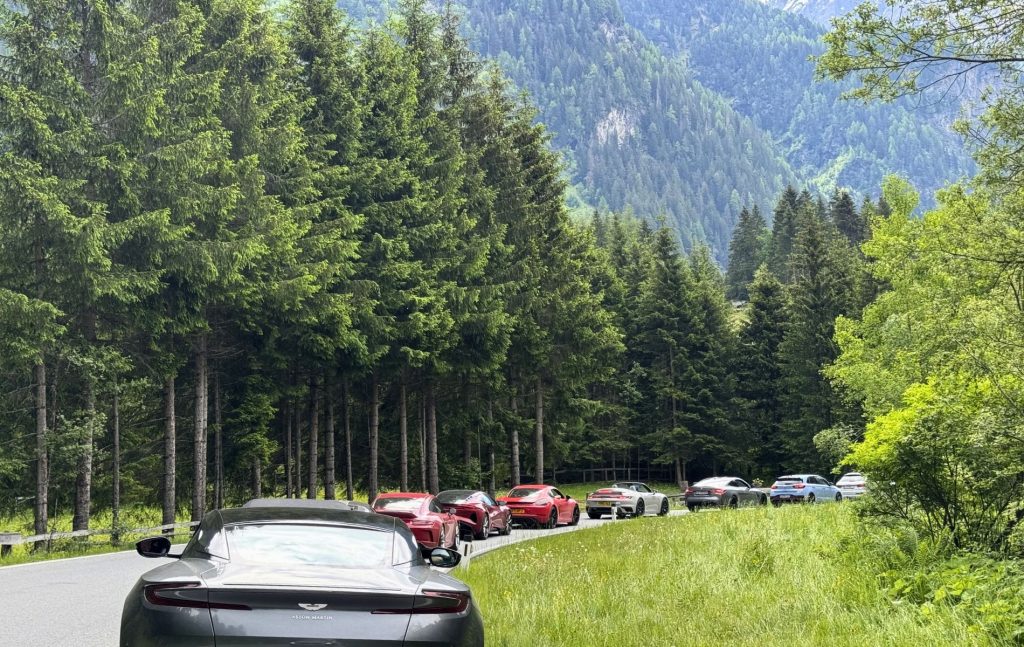
There are also places where there are limited speeds or complete vehicular restrictions, such as in Grenoble where traffic on the Rey and Agutte-Sembat boulevards are reserved for pedestrians, bicycles, public transport and authorised vehicles.
Geneva and several surrounding towns in Switzerland operate a similar system called Stick’AIR. These zones can temporarily restrict high-emission vehicles during pollution spikes, and fortunately, a French Crit’Air sticker is usually accepted there too.
If you already have a Crit’Air sticker, typically this is also valid in Switzerland.
Switzerland also enforces noise and idling rules. Even leaving your engine running without good reason can land you with a fine, especially in residential or eco-sensitive areas.
Austria currently has no eco-zone restrictions for cars, but cities like Innsbruck have expressed interest in improving air quality through potential new measures, though nothing has been formally implemented yet.
The EU’s tougher Euro 7 emissions regulations are looming too, currently due to come into force in November 2026, which may eventually affect how and where you can take your high-revving V8, V10 or V12.
If you’ve been putting off that Euro road trip, now might be the perfect time to go before things get even tighter.
Hotel parking and security: not always supercar-friendly
When driving to the continent checking out parking and security is a must. Many luxury hotels in Europe offer underground parking, which sounds great on paper but isn’t always ideal for a low-slung supercar.
Steep ramps, tight turns and narrow bays can be a nightmare if your car doesn’t have a front-nose lift. And parking sensors won’t help much when the space is barely wide enough to swing open a door.
If you’re booking a hotel, get in touch with them first and ask:
- Is the car park surface-level or underground? Steep ramps can damage front splitters or carbon fibre noses.
- Do you have a flat entry or ramps? If ramps, how steep are they?
- Is the entrance wide enough for a supercar? Some are narrower than you’d expect, especially in older city hotels.
- Are your parking bays large enough for wider vehicles? Standard bays can be very tight for cars with wide bodywork or scissor doors.
- Is there sufficient ground clearance throughout the car park for low vehicles?
Also, ensuring your supercar will be secure is key, so check the hotel’s security measures:
- Is the parking area gated, or does it have controlled access, and is it monitored by CCTV or patrolled regularly?
- Do they offer valet parking, and can you choose to self-park instead?
- Can they allocate a specific bay or a space away from other vehicles to reduce the risk of accidental damage?
Finally, find out whether the car park is exclusively for hotel guests or also open to the public, as this can have an impact on overall security.
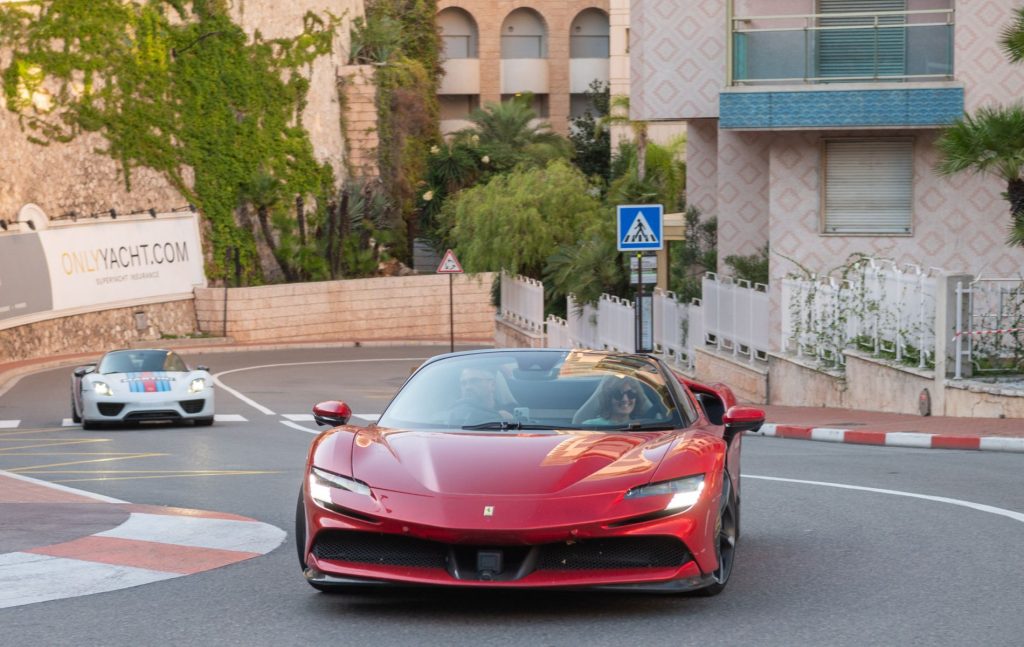
Speeding: know where the fun stops
Yes, we all love the autobahn, and yes, there are still parts of Germany where you can go flat out, legally (though more restrictions are coming in), but don’t assume that attitude carries across borders.
Switzerland is unforgiving when it comes to speeding. Go more than 40 km/h over the limit and you could face enormous fines.
In France, exceeding the speed limit by 30 km/h could result in a hefty fine, possible licence suspension, and even roadside vehicle seizure. Authorities there don’t mess about.
And Austria uses average speed cameras (known as section control), particularly in mountainous areas like the Tauern and Arlberg passes, so don’t be tempted to floor it between tunnels.
Driving to the continent
A European supercar road trip should be unforgettable for the right reasons. With a little planning, you can enjoy world-class roads, breath-taking views and a driving experience like no other.
So, if you are driving to the continent, just make sure your supercar is compliant, your hotel has great access and security, and you know what the local rules are before you cross the border.
Interested in expertly planned drives and connecting with other supercar owners? Explore SCC membership and our exclusive touring events.
This article is for general informational purposes only and does not constitute legal advice. Driving laws and emissions regulations may change and vary by region. Always check local rules before you travel.
